FreeCryptoCurrency.Me

Free stocks and money too!

Category Archive : Crypto News

OneCoin co-founder Karl Sebastian Greenwood pleads guilty: DOJ

Karl Sebastian Greenwood pled guilty to wire fraud and money laundering connected to the fraudulent OneCoin scheme, the Department of Justice announced.

Greenwood co-founded OneCoin along with so-called “Crypto Queen”-turned-fugitive Ruja Ignatova in 2014, after which the two perpetrated a multibillion-dollar global scam.

“Greenwood and his co-conspirators, including fugitive Ruja Ignatova, conned unsuspecting victims out of billions of dollars, claiming that OneCoin would be the ‘Bitcoin killer.’  In fact, OneCoins were entirely worthless,” said U.S. Attorney Damian Williams.

Emails between Ignatova and Greenwood suggest a ploy to take advantage of investors. As they corresponded, the two plotted to simulate volatility and fix exchange prices. An estimate suggests victims invested over $4 billion in funds, according to the DOJ.

Ignatova, who remains on the Federal Bureau of Investigation’s top 10 most wanted list, is still at large.

© 2022 The Block Crypto, Inc. All Rights Reserved. This article is provided for informational purposes only. It is not offered or intended to be used as legal, tax, investment, financial, or other advice.

Go to Source
Author: Jeremy Nation

Key financial regulators call for stronger licensing of crypto firms

Several key financial regulators in the U.S. cited issues with cryptocurrency firms and called for stricter licensing at a Friday meeting of the Financial Stability Oversight Council, a committee of U.S. financial regulators. 
 
“Bringing intermediaries as well as the issuers of crypto securities tokens into compliance is so important,” Securities and Exchange Commission chairman Gary Gensler said, adding that he believed many crypto firms were not following existing rules. “Nothing about the crypto markets is incompatible with the securities laws yet risk from this speculative, volatile and what I believe is largely non-compliant market – that’s non-compliant with our existing laws – put investors at risk.”

The SEC, including current Chair Gensler and former Chair Jay Clayton, has long maintained that most digital assets are securities, and fall under securities laws. 

Crypto exchanges operating within the U.S. currently do so primarily via various state money transmitter registrations. Fellow FSOC member Rohit Chopra, the director of the Consumer Financial Protection Bureau, argued that status quo is inadequate for crypto and other fintech firms, especially those that hold customer deposits without insurance from the Federal Deposit Insurance Corporation, citing the recent collapse of FTX. 

“The failure of such a firm could lead to millions of American consumers becoming unsecured creditors of the bankruptcy estate, similar to the experience with FTX,” he said, referring to the collapsed crypto exchange. “Our state money transmitter laws were not designed to assure the long-term stability of these types of firms.”

Treasury Secretary Janet Yellen referred to an October report from FSOC, noting that “crypto asset activities could pose risk to the U.S. financial system if their interconnections with the traditional financial system or their overall scale were to grow without adherence to or being paired with appropriate regulation.”

The regulators also want to assess whether the way some digital asset exchanges are structured “can or should be accommodated under existing laws and regulations,” according to a summary of the 2022 annual report they unanimously approved today.

That report also calls for increased enforcement of current financial laws with regards to digital assets, address “regulatory arbitrage,” and for Congress to pass a new law to give regulators more direct power over spot markets for bitcoin and other digital assets that aren’t considered to be securities. 

© 2022 The Block Crypto, Inc. All Rights Reserved. This article is provided for informational purposes only. It is not offered or intended to be used as legal, tax, investment, financial, or other advice.

Go to Source
Author: Kollen Post

Dragonfly leads ‘crypto super app’ Utorg’s $5 million raise

Utorg raised $5 million in a seed round led by Dragonfly.

TA Ventures and Hypra fund also participated in the round, according to a statement from the company. The new funds are expected to secure new licenses, expand the team and build out new revenue sources.

The startup’s business model currently relies on transaction fees. However, it is aiming to build a “super app” that merges the old and new worlds of finance, the company said. Talinn, Estonia-based Utorg is a payments gateway for fiat-to-crypto purchases in more than 187 countries.

Building a super app

“Alongside modern web3 functions, such as a non-custodial wallet, swaps, NFT integration, portfolio and yield-saving accounts,  Utorg’s upcoming super app will also provide regular banking features, such as credit cards and IBAN numbers, to make the app the most accessible solution on the market,” Utorg said.

The super app is slated for release by the end of 2022.

Utorg’s most successful product currently is an embeddable widget for apps and websites that enables people to purchase crypto without hidden fees by using more than 15 different payment methods, according to the statement.

Growing in a bear market

“Eventually, we want to build a service that could become the sole financial hub for any person on the planet, powered by blockchain technology,” the founding team said. “And it should be as simple in use as a calculator simultaneously.”

The startup, which was founded in 2020, currently has a team of 35 and has legal entities in Estonia, Lithuania, Singapore, Abu-Dhabi, Canada and Thailand.

“Crypto has a lot of room to grow, especially when it comes to fiat-onramps like Utorg that allow users to take their first step onto the blockchain,” said Haseeb Qureshi, a managing partner at Dragonfly. “They’ve managed to grow at an exceptional rate even in a bear market, and we’re eager to see them grow into even greater success as they are integrated into more products.”


© 2022 The Block Crypto, Inc. All Rights Reserved. This article is provided for informational purposes only. It is not offered or intended to be used as legal, tax, investment, financial, or other advice.

Go to Source
Author: Kari McMahon

FTX, Bahamas liquidators remain at loggerheads over system access

FTX, the Bahamas government, and lawyers hired to liquidate the failed crypto empire’s Bahamian operations remain at loggerheads over granting access to FTX’s Bahamian computers to review what assets are still there.

In a U.S. Bankruptcy Court, District of Delaware hearing today, the two sides argued, again, over continuous access to the files.

New FTX CEO John Ray III and lawyers from the firm Sullivan and Cromwell hired to represent the company in bankruptcy proceedings have accused the Bahamian government of collaborating with federally-indicted former CEO Sam Bankman-Fried to illegally shift assets out of the Bahamian operation, an accusation the Bahamian government has objected to both in public statements and court.

Executives from FTX, Bahamian government officials, and lawyers met yesterday in New York and had “a productive exchange of views,” according to Sullivan and Cromwell partner James Bromley. But the company still does not trust the Bahamian government and lawyers appointed to liquidate FTX Digital Markets — the portion of Bankman-Fried’s large corporate web that is in a separate bankruptcy process in the Bahamas — with continuous access to computer systems.

Bromley said the company could allow “static” access to computer systems for their counterparts but continue to oppose continuous access due to suspicions around the relationship between Bankman-Fried and the Bahamian government. The country’s securities regulator pulled assets worth hundreds of millions of dollars out of the company after obtaining a court order from the Supreme Court of the Bahamas to do so. 

“We think that makes the issue simpler and cleaner,” said Bromley.

But a representative for the liquidators, Jason Zakia of the law firm White and Case, disputed that contention.

“They need access to their debtors’ books and records in order to do their job as court-appointed fiduciaries,” he told presiding Judge John Dorsey. “This is really interfering with the ability of the liquidators to do their job.”

A hearing, with witnesses expected, is scheduled for Jan. 6 if the two sides cannot agree on a resolution before then.

On Monday, Bromley and lawyers for the company submitted emails from the week of FTX’s collapse between Bankman-Fried and Bahamas Attorney General Ryan Pinder showing Bankman-Fried offering to give preferential treatment to Bahamas customers by fully refunding account holders from the island nation. The Bahamas Securities Commission, other FTX executives, and Bankman-Fried’s father were included in the email thread. Hours later, the company claimed on Twitter that the government and regulators had told it to facilitate withdrawals for local customers.

The Bahamas Securities Commission disputed this in a court filing on Wednesday that included correspondence by the regulator on the same day alerting Bahamian police to the transfer of funds from FTX to Alameda Research after a call between the regulator and FTX co-CEO Ryan Salame.

Disclaimer: Beginning in 2021, Michael McCaffrey, the former CEO and majority owner of The Block, took a series of loans from founder and former FTX and Alameda CEO Sam Bankman-Fried. McCaffrey resigned from the company in December 2022 after failing to disclose those transactions.

© 2022 The Block Crypto, Inc. All Rights Reserved. This article is provided for informational purposes only. It is not offered or intended to be used as legal, tax, investment, financial, or other advice.

Go to Source
Author: Colin Wilhelm

Swanky crypto meet-up scene unlikely to cool down much despite downturn

Optimism may remain in short supply across the cryptoverse for some time to come, but that isn’t stopping conference organizers from staging a staggering number of events in the year ahead. 

Champagne-fueled ‘panels’ hosted in London’s Shard, free diamonds, Dubai yacht parties, supermodels in the Bahamas, private concerts with Grimes, corporate boxes at the Formula 1 Grand Prix, the list goes on. Even with the arrival of a prolonged bear market 2022’s event schedule may have been the busiest and most decadent on record, with thousands of speakers speaking to thousands more attendees.  

And while many insiders expect event organizers will scale back in 2023 and aim to spend with greater care, crypto enthusiasts eager to mingle will have a wide array of events to attend, especially if money and geography are not an obstacle. The question is, how will organizers balance sponsors’ money wisely while simultaneously attracting top-flight speakers capable of luring droves of attendees willing to spend hundreds, if not thousands, of dollars on a handful of days of networking.  
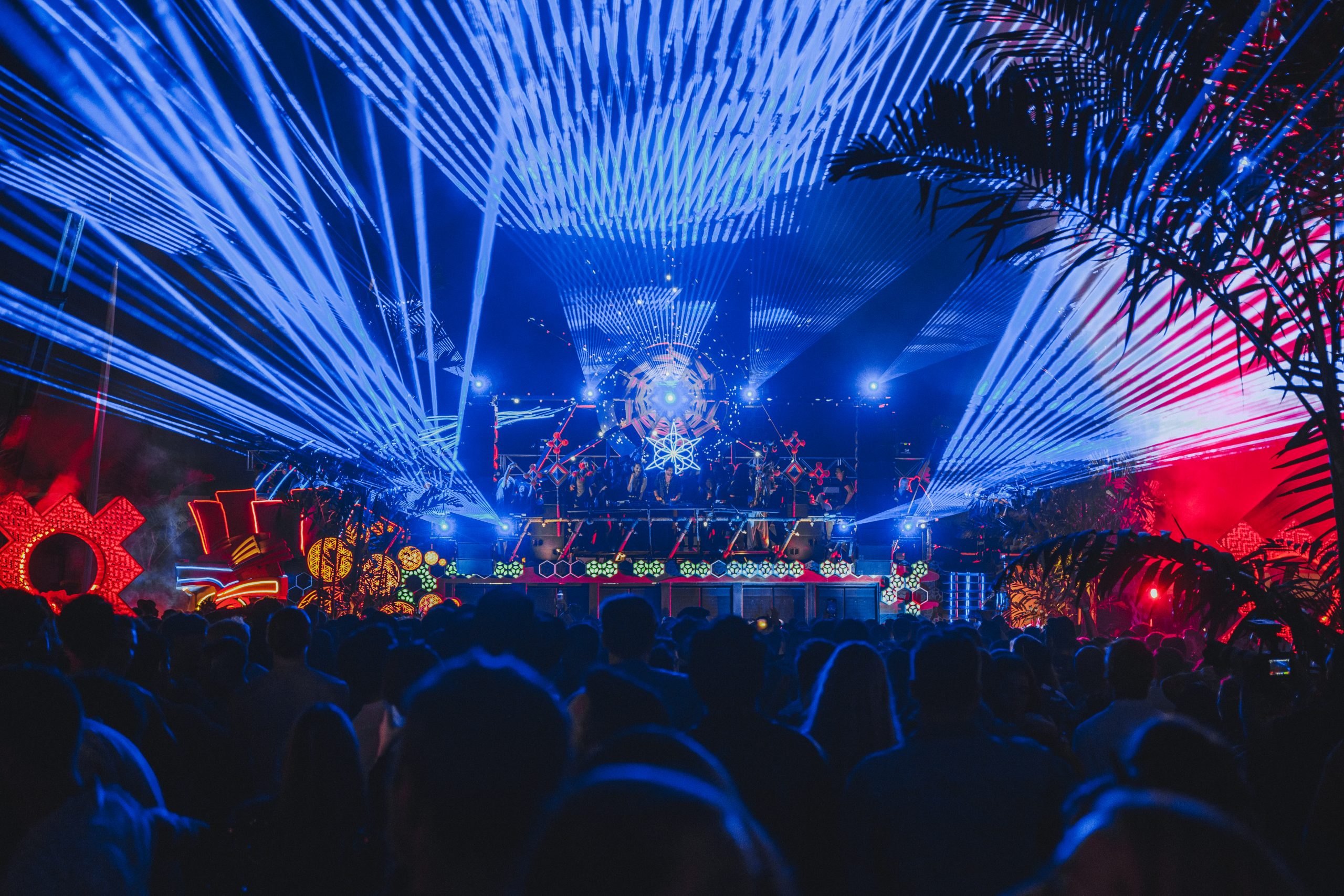
Beyond Basel in Miami from December 2022

Reputable brands to the front

“Bear markets are the time for reputable brands to stand out,” said Jason Yanowitz, co-founder of Blockworks’ Permissionless, which was held in Palm Beach, Fla. this year. “In bull markets, every company can sponsor a show. In bear markets, only the best companies tend to represent at events.”

This year’s edition scored about 100 sponsors including major U.S.-based exchange Coinbase, which charged $2,500 for three-day general admission passes and hosted more than 5,000 attendees, according to Permissionless’ website.

Tickets for 2023 have been in “surprisingly high demand,” said Yanowitz, with the first batch of tickets selling out in six hours. Now there is a waitlist longer than the total number of available tickets, he added.

NFT Paris co-founder Alexandre Tsydenkov echoed Yanowitz’s sentiments with regard to companies’ commitment to the event circuit. “The more mainstream brands aren’t so bothered about crypto winter,” he said in an interview with The Block. “They don’t care about token prices.”

Tsydenkov said he and his team are trying to craft the second edition of NFT Paris, which is scheduled for February, around immersive experiences and specially curated stages. They have decided to limit the number of speakers to 100 opposed to other similar — but unaffiliated — events like NFT LA and NFT.NYC, which this year hosted 250 and 1,500 speakers, respectively.

Wrangling 250 speakers wasn’t as difficult as deciding on who to invite, said Josh Kriger, who as the co-host of the “Edge of NFT” podcast, also organized NFT LA. “There were thousands of applicants,” he said. “The bigger challenge was narrowing down the pool of immensely qualified folks while being inclusive.” 

Vision vs. reality

While most event planners and sponsors largely exude optimism when describing the conference scene, others say there are steps that could be taken to improve things. “At the moment a lot of these events can feel disjointed and disorganized, and I think there is room for improvement in terms of organization,” said Trippy, a pseudonymous NFT artist and lead organizer of Beyond Basel, a web3 festival and three-day dance party put on in Miami this year.

One marketing executive at a major NFT marketplace, and regular sponsor of events, said the conference scene is borderline unbearable. “I am blown away by the volume of seemingly pointless and random events all over the world that happen in this space,” they said. “Obviously some are great, but most are fluff.”  

Another marketing executive at a crypto custody software provider felt that the level of discourse declined over the course of the year. “After Covid, everyone flooded back to events and now are kinda over them,” she added.

Regardless of quality, the conference scene has evolved dramatically during the last five years. Gone are the days, according to Trippy, where people mostly spoke “about projects that had not yet launched” or people made “fairly big promises without much of a working product or platform.” Now Trippy says the industry is transforming and is full of specialization and “functioning technologies that regular consumers can use.” 

The crypto conference industrial complex

And as use cases and the number of companies grew in parallel to the number of people buying crypto or NFTs, the number of places around the world hosting events has also proliferated. Besides the standard events in places like Miami and Dubai, 2023 will see events held all around the world including countries like Greece, Thailand, Singapore, Germany, South Africa, Romania and Brazil.  

However, with the proliferation of events a kind of crypto-conference industrial complex has taken hold. A competitive and saturated circuit means event organizers are being forced to find creative ways to stand out, whether that be more immersive experiences, selling passes which offer additional networking opportunities, engineering collaboration among entrepreneurs and developers, or exclusive parties for wealthier attendees.

However, simultaneously rising inflation coupled with volatile market conditions and dramatically reduced values means attendees and sponsors alike have less discretionary income. And that will put financial pressure on organizers, according to Lisa Fridman, president and co-founder of web3 company Quadrata.
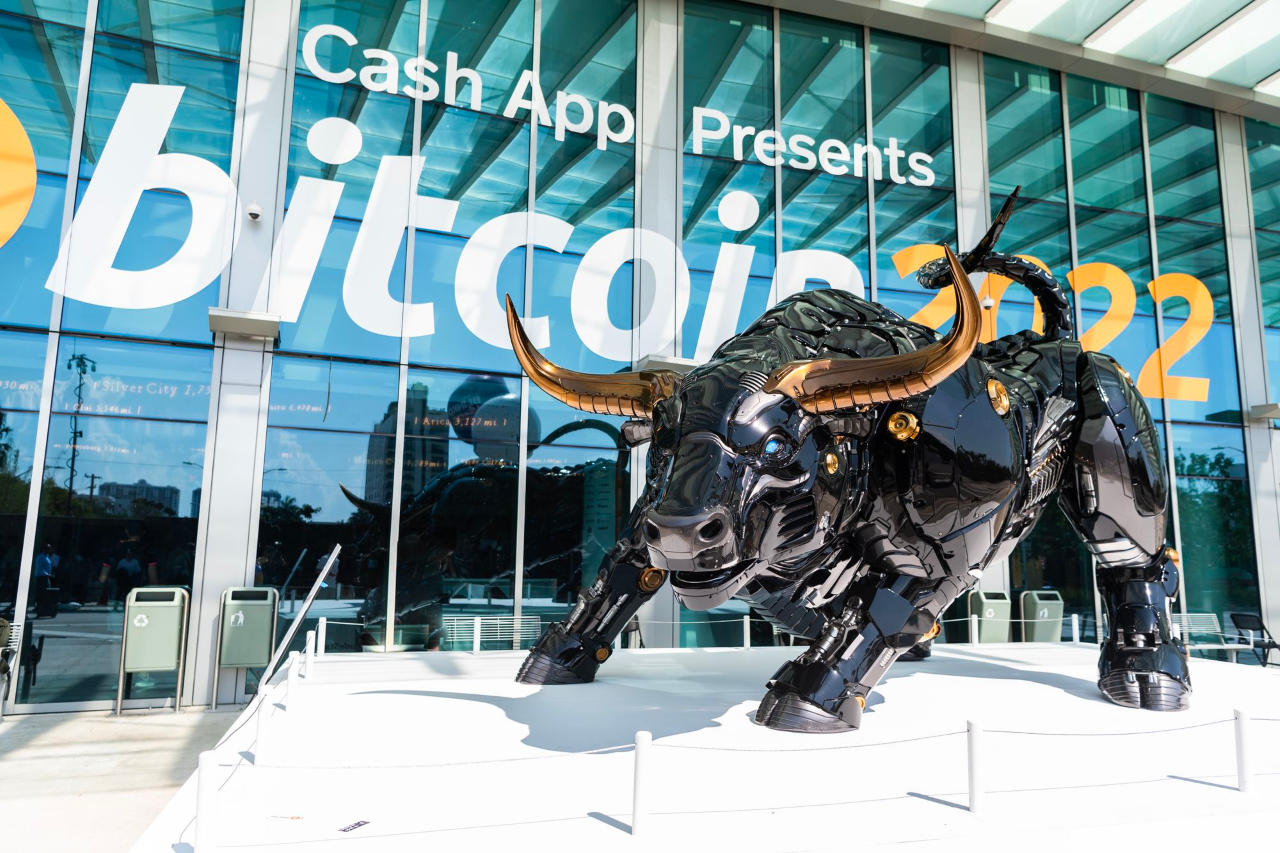
Photo: Bitcoin Miami’s cyborg bull

“Now that the industry is undergoing some growing pains, focusing more on risk management and perhaps learning some lessons from traditional finance, I expect to see a more balanced approach to conferences and more frugal spending,” she said.

Being thrifty while spending enough to hire high-profile speakers and rent out massive venues will be especially difficult for big events like Bitcoin 2023, which lured 25,000 people to this year’s event in Miami and featured a cyborg bull statue designed by the same firm that made the Transformers for director Michael Bay’s blockbuster film franchise.  

This year two-day general admission passes cost about $500 while a VIP “Whale Pass” runs closer to $7,000. Bitcoin 2023 organizers are confident current market conditions won’t deter would-be attendees. 

“This won’t be our first bear market conference. Our Bitcoin conference in 2019 was at the absolute bottom of a bear market, and it brought huge value to the community,” BTC Media General Manager Christian Keroles said by email. “We see it as an opportunity to go back to the fundamentals and focus on what’s different between bitcoin and crypto. We will focus on what is traditionally significant for any bitcoin bear market, building and learning.”

10 events to watch out for in 2023

NFT Paris Feb. 24-25
ETH Denver Feb. 24-Mar. 5
Paris Blockchain Week Mar. 20-24
NFT.NYC Apr. 12-14
Consensus, Austin TX Apr. 26-28
Avalanche Summit  May 3-5
Bitcoin Miami  May 18-20
Permissionless, Austin TX Sept. 11-13
Mainnet, NYC Sept. 20-22
Token 2049, Singapore Mid-September (no set date yet)


© 2022 The Block Crypto, Inc. All Rights Reserved. This article is provided for informational purposes only. It is not offered or intended to be used as legal, tax, investment, financial, or other advice.


Go to Source
Author: RT Watson and Lucy Harley-McKeown

FTX bankruptcy case inches closer to potentially naming creditors

Lawyers for beleaguered crypto exchange FTX did not object to media arguing in the firm’s bankruptcy case, taking a step toward potentially identifying customers tied up in the collapse.

Media outlets including The New York Times and Bloomberg recently filed a motion in the FTX case to make creditor information public, citing public interest. Lawyers for FTX, however, want to keep the creditor list private. A federal judge moved to keep FTX creditors anonymous on a temporary basis in November. 

Both parties appeared before a Delaware bankruptcy court judge Friday morning to hash out how the court would handle the disagreement. FTX has more than 100,000 creditors, and the top 50 could be owed $3.1 billion.

“We are already starting a process of names dribbling out,” said David Finger, the attorney representing media outlets seeking to intervene in the case. “The names are going to come out eventually.” 

Finger noted that some FTX creditors have already become public after the U.S. Trustee in the case identified members of a creditors committee. FTX attorney Brian Gluckstein did not object to media outlets arguing in the case.

“The debtors do not object to the media outlets intervening for the sole purpose of permitting the court to hear their objection to the debtors’ motion,” said Gluckstein, a member of the Sullivan and Cromwell law firm. “That motion is not being heard on the merits today. It will be heard at a future hearing.” 

The next hearing on that matter in the bankruptcy case is set for Jan. 11.

Lawyers for FTX also said they no longer wished to keep an indemnification and exculpatory motion under seal. They previously asked the court to keep a motion under seal because the firm worried it would reveal some details of their asset recovery efforts. Assets worth hundreds of millions of dollars were transferred from FTX the night the firm filed for bankruptcy. Now, lawyers say FTX has made progress in the recovery and they are comfortable with unsealing the motion.

FTX filed for bankruptcy protection in November, after a run on its FTT token decimated the exchange. The firm was once valued at $32 billion, and the company’s bankruptcy filing includes more than 100 related entities. 

Former FTX CEO Sam Bankman-Fried was charged with fraud this week after being arrested in the Bahamas. Bankman-Fried is accused of using FTX customer funds to prop up his trading firm, Alameda Research, among other misdeeds.

The disgraced crypto boss was denied bail and is being held in a Nassau prison until a February court hearing, in criminal proceedings separate from the bankruptcy case. 

Disclaimer: Beginning in 2021, Michael McCaffrey, the former CEO and majority owner of The Block, took a series of loans from founder and former FTX and Alameda CEO Sam Bankman-Fried. McCaffrey resigned from the company in December 2022 after failing to disclose those transactions.

© 2022 The Block Crypto, Inc. All Rights Reserved. This article is provided for informational purposes only. It is not offered or intended to be used as legal, tax, investment, financial, or other advice.

Go to Source
Author: Stephanie Murray

Bitfarms nets $3.6 million gain from de la Pointe property sale

Mining firm Bitfarm, which has locations across the Americas, sold a property in de la Pointe, Quebec for a net profit of $3.6 million. 

The de la Pointe property used hydroelectric power from Hydro Quebec to operate a bitcoin mining rig. Société de transport de Sherbrooke (STS), a Quebec-based public transportation service, purchased the property and plans to use it to power its green bus service, electric-assist bike sharing program and other sustainability initiatives beginning next summer.

Bitfarm intends to build out a new location and is doing so ahead of schedule, the company said in a statement

The depressed crypto market has not spared bitcoin miners, which have seen shares fall throughout the year, according to The Block’s Data Dashboard. Bankruptcies of major crypto lenders have also amplified the blow, such as the troubled crypto lender Blockfi that loaned $32 million to Bitfarms, The Block previously reported.

© 2022 The Block Crypto, Inc. All Rights Reserved. This article is provided for informational purposes only. It is not offered or intended to be used as legal, tax, investment, financial, or other advice.

Go to Source
Author: MK Manoylov

Bitcoin slips, struggles to hold $17,000, Binance’s BNB slumps even further

Cryptocurrencies and crypto-related stocks were down in line with broader financial markets after a busy week of economic data and, of course, the arrest and charging of Sam Bankman-Fried.

Bitcoin flirted with the $17,000 mark, down about 2.6% in the past day, according to TradingView data. Ether sold off more severely, dropping 4.8% to $1,215 by 10 a.m. EST. 

Other cryptocurrencies and memecoins experienced a more significant sell-off. Binance’s BNB dropped over 5%, as did Cardano, while Polygon’s MATIC fell 3.6%. Dogecoin and shiba inu shed 5.2% and 3%, respectively.

Crypto stocks and structured products

U.S. stock indices were down in early morning trading on the East Coast. The S&P 500 and the Nasdaq 100 shed 0.74% and 0.2%, respectively.

Coinbase shares reached new all-time lows shortly after the market’s opening. COIN was trading down 2% to $37.20 by 10 a.m. EST today, according to Nasdaq data. 

MicroStrategy suffered heavier losses, dropping 3.2% to trade at $182. Block fell 2.72% to $64. 

Shares in crypto bank Silvergate performed marginally better, bucking the downward trend for much of the day on Thursday. The La Jolla-based bank’s stock was down 0.53% to $18.84 today.

The discount to net asset value (NAV) of Grayscale’s GBTC fund narrowed at the week’s close. The shares in the fund versus the value of the bitcoin it holds traded at a discount of 47.85% today from above 48%, according to The Block’s data. 


© 2022 The Block Crypto, Inc. All Rights Reserved. This article is provided for informational purposes only. It is not offered or intended to be used as legal, tax, investment, financial, or other advice.

Go to Source
Author: Adam Morgan McCarthy

Solana-based exchange Raydium suffers $2 million exploit

Raydium, a decentralized exchange built on the Solana blockchain, suffered an exploit that appears to have taken more than $2 million.

Raydium acknowledged the exploit and said it believed that an attacker took control over the exchange’s admin address to carry out the exploit and that it’s investigating the matter.

The attacker withdrew liquidity pool (LP) tokens into their control. On-chain sleuth ZachXBT found the perpetrator transferred more than $2 million to Ethereum, suggesting the amount of funds the attacker netted.

The finding was corroborated by analytics firm Nansen. “The wallet draining LP Pools from Raydium liquidity pools has received over $2.2M now, including $1.6M SOL,” Nansen said.

Security firm Otter described the incident as a hack and said it was probably a compromised private key. Raydium still holds more than $40 million in crypto assets, according to data from DeFiLlama.

Prysm, a decentralized exchange aggregator on Solana, was the first to note the suspicious transactions.

© 2022 The Block Crypto, Inc. All Rights Reserved. This article is provided for informational purposes only. It is not offered or intended to be used as legal, tax, investment, financial, or other advice.

Go to Source
Author: Vishal Chawla

Donald Trump NFT collection sells out within hours

A 45,000 item NFT trading card collection created by the former U.S. president Donald Trump sold out within hours and has already racked up more than 648 ETH, or about $785,000, in trading volume, according to OpenSea data. 

The public sale commenced Thursday night following a teaser of a “major announcement” and an unveiling on Trump’s Truth Social account. The initial mint price was set at $99. Buying an NFT automatically entered the purchaser into a sweepstake, with prizes including a group cocktail party at Mar-A-Lago, a dinner in Miami or a golfing trip with the former president, or a group Zoom call. 

Buying 45 or more NFTs would “guarantee” purchasers an invite to a gala dinner with the Republican in South Florida, the announcement said. 

It appears there are already some Trump NFT whales among holders. Currently, 34 wallets hold 100 or more items from the collection. OpenSea figures also suggest that 1,000 of the NFTs were airdropped to one wallet hours before the public sale. The second-biggest holder currently owns 673 NFTs from the collection.

The Block contacted the project for more information on the wallet containing the 1,000 NFTs and the nature of the airdrop, but had not heard back by publication time. 

The mint may have netted Trump almost $4.5 million. Creator fees set by OpenSea also give a 10% royalty on secondary sales, meaning the project will already have accrued almost $80,000 from trades to date. 

Some items are already reselling for more than $7,000. An NFT collector called Nanitor bought a greyscale NFT of Trump in a Christmas hat for 6 ETH (or $7,200). 

Trump follows his wife Melania onto the blockchain. The former first lady said she was working with Solana to launch her collection — a claim which was later denied by Solana Labs. “I wanted to inform you, to avoid any confusion, that her choice to use the Solana blockchain was completely organic and this project is not part of any Solana-led initiative,” a Solana representative wrote in an emailed statement at the time. MoonPay also denied involvement. 

Donald Trump’s collection was launched on Polygon, which is is fast becoming the blockchain mega corporations turn to to expand their crypto presence. Reddit chose the chain for its own set of collectable avatars, Meta’s Instagram tapped it for its upcoming NFT marketplace and Starbucks used it for its web3 loyalty product

© 2022 The Block Crypto, Inc. All Rights Reserved. This article is provided for informational purposes only. It is not offered or intended to be used as legal, tax, investment, financial, or other advice.

Go to Source
Author: Lucy Harley-McKeown


Follow by Email
Facebook20
Pinterest20
fb-share-icon
LinkedIn20
Share