FreeCryptoCurrency.Me

Free stocks and money too!

Category Archive : Crypto News

Andreessen Horowitz gaming partner James Gwertzman exiting VC firm

After a little more than a year as a general partner at Andreessen Horowitz, one of the most prolific investors in web3 technologies, James Gwertzman announced he is stepping down at the end of the month.

“I’ve made the decision to step back from my role as [general partner] at a16z in order to go back to being a full-time builder,” he said in a LinkedIn post. “I’m proud of helping launch Games Fund One, and I’ve loved learning the VC ropes, but I miss being an entrepreneur.”

In recent years Andreessen Horowitz, or a16z, has established itself as one of the biggest investors in web3 developers and platforms, including blockchain-powered gaming projects such as Sky Mavis, which is responsible for the once highly popular play-to-earn game Axie Infinity, and Mythical Games, which is also releasing web3 titles.

Gwertzman’s departure comes at what could turn out to be an inflection point in web3 gaming as a new wave of titles developed by veteran gaming executives begin to compete with an initial phase of easier-to-build, 2D games.

In May of last year a16z announced its $600 million Games Fund One. At the time of the announcement, a16z said Gwertzman would help lead the fund focused on web3 gaming.

A16z did not immediately respond to an email request for comment.

Before joining a16z, Gwertzman spent several years working for Microsoft, where he also specialized in gaming, according to his LinkedIn profile.

“I haven’t decided yet what to focus on next and I’m looking forward to taking some time before I jump back in,” Gwertzman also said in his post. “As a VC I saw many gaps in the market where I would have liked to invest, and am now considering building.”

© 2023 The Block Crypto, Inc. All Rights Reserved. This article is provided for informational purposes only. It is not offered or intended to be used as legal, tax, investment, financial, or other advice.

Go to Source
Author: RT Watson

MakerDAO voting to limit DAI exposure to Gemini amid insolvency fears

MakerDAO has begun voting on a pair of governance polls designed to limit exposure of the DAI stablecoin to Gemini as a result of the current liquidity crisis facing the exchange’s lending platform called Earn.

The Gemini dollar, or GUSD, is one of the collateral assets used for minting the DAI stablecoin issued by the Maker protocol. Gemini and Maker entered into a partnership last year that saw the latter earn 1.5% when GUSD collateral in the Maker PSM exceeds $100 million. PSM stands for peg stability module and is the mechanism by which users can mint DAI in exchange for any Maker-accepted collateral. The PSM also maintains DAI’s parity with the U.S. dollar.

The GUSD collateral in the Maker protocol is now $489 million against a $500 million debt ceiling — the maximum amount of DAI that can be minted from Gemini dollar. MakerDAO participants have raised concerns about DAI’s exposure to Gemini and the potential insolvency risks associated with the Earn program’s $900 million locked in the troubled crypto lender Genesis Global Capital.

Gemini CEO Tyler Winklevoss has moved to allay such fears, saying in a post on the Maker forum that MakerDAO’s exposure to Gemini was limited to the GUSD in the PSM. Winklevoss added that the GUSD reserve backing DAI was not the property of the company and hence would not be part of any bankruptcy proceedings.

Details of the vote

These concerns have prompted two governance polls on MakerDAO. The first poll is to set the tout — the percentage fee charged for swapping DAI back to the collateral asset —for the GUSD vault to zero, which would effectively mean that users can swap DAI back to GUSD at no cost.

The second poll is to reduce the debt ceiling currently at $500 million.

Both polls will end on Jan. 19. The current voting figures for the first poll show the DAO is in support of setting the tout to zero. However, the second poll is still a much closer contest between those who favor maintaining the current debt ceiling and those who want it reduced to zero.

Governance polls are the first step in the MakerDAO voting process. Polls that scale this step will move to an executive vote before being implemented on the Maker protocol.

© 2023 The Block Crypto, Inc. All Rights Reserved. This article is provided for informational purposes only. It is not offered or intended to be used as legal, tax, investment, financial, or other advice.

Go to Source
Author: Osato Avan-Nomayo

US authorities to announce international crypto enforcement action

U.S. authorities plan to announce an enforcement action against an international crypto entity at noon ET today. 

Representatives from the FBI, the Office of Foreign Asset Control (OFAC), the Financial Crimes Enforcement Network (FinCEN) and the Eastern District of New York will take the stage with Deputy Attorney General Lisa Monaco to release the news, according to an announcement. 

The combination of agencies suggests both criminal and civil interest. OFAC, for example, administers the U.S. sanctions regime, while FinCEN collects reports from financial institutions, monitoring for suspicious transactions. 

© 2023 The Block Crypto, Inc. All Rights Reserved. This article is provided for informational purposes only. It is not offered or intended to be used as legal, tax, investment, financial, or other advice.

Go to Source
Author: Kollen Post

Celsius and Fabric Ventures lock horns over $8 million Series B clawback

Bankrupt crypto lender Celsius is attempting to call in a more than $6 million from an $8 million investment commitment made by VC firm Fabric Ventures.

Fabric was set to invest more than $8 million in Celsius’s Series B round, spread across three payments, according to a court document filed Tuesday. Celsius said it had closed its extended Series B in November 2021, boosting a $400 million round to $750 million at a $3.25 billion valuation. 

Following a schedule agreed in April last year, Fabric’s first payment of $2 million was made in May. The subsequent payments were supposed to be $2 million in June and $4 million in July. 

The arrangement did not go to plan. The beleaguered lender filed for bankruptcy in July, roughly a month after halting client withdrawals and trapping billions of dollars across more than a million accounts. Recent court documents showed that Celsius’s liabilities were more than $6.7 billion and its assets were worth only around $3.9 billion, resulting in a balance sheet hole of $2.8 billion.

“This action seeks damages in the amount of the two outstanding payments, $6,003,379, plus interest, fees and other relief specified below,” the newly filed court document states.

Initial investment

Correspondence in the court document shows that Fabric had also attempted to claw back its initial $2 million advance pending completion of the investment, as news of trouble at Celsius spread. 

Celsius did not respond to a request for comment. Fabric declined to comment. 

The move is the latest in a long-running bankruptcy process which is being shepherded by U.S. law firm Kirkland & Ellis for Celsius. Last week, documents showed that the lender has set about selling its bitcoin mining equipment for $1.3 million. It is letting go of nearly 2,700 “new-in-box” MicroBT M30S units, according to a Jan. 11 notice of sale filed with the U.S. Bankruptcy Court for the Southern District of New York.

© 2023 The Block Crypto, Inc. All Rights Reserved. This article is provided for informational purposes only. It is not offered or intended to be used as legal, tax, investment, financial, or other advice.

Go to Source
Author: Lucy Harley-McKeown

Cathie Wood-backed 21shares offers first staking index ETP

Cathie Wood-backed 21Shares unveiled the 21Shares Staking Basket Index ETP, the first crypto staking index ETP offering diversified staking income.

The 21Shares Staking Basket Index ETP tracks proof-of-stake cryptocurrencies including Binance Coin, Cardano, Cosmos, Polkadot, Solana and Tezos, the company said. The 21Shares staking index methodology was built in collaboration with Swedish index provider Vinter.

“Staking is a long-standing feature of the blockchain ecosystem that allows crypto holders to earn rewards in exchange for locking up their assets,” said Arthur Krause, director of ETP Product at 21.co, the parent company of 21Shares. 

The ETP comes as cryptocurrencies are seeing a mild recovery in pricing after plummeting from Nov. 2021 highs. 21Shares already offers the 21Shares Solana Staking ETP and the 21Shares Tezos Staking ETP. Other European issuers offer ETPs that track PoS coins but not an index. CoinShares offers a physical staked Cardano ETP.

The 21Shares Staking Basket Index ETP is available today for trading on the BX Swiss exchange. The index will rebalance on a semi-annual basis in March and September to reflect market shifts.

21.co raised $25 million at a $2 billion valuation in a funding round led by Marshall Wace in September.

© 2023 The Block Crypto, Inc. All Rights Reserved. This article is provided for informational purposes only. It is not offered or intended to be used as legal, tax, investment, financial, or other advice.

Go to Source
Author: Christiana Loureiro and Adam Morgan McCarthy

Shiba inu jumps 15% as ether trades around $1,600 following PPI release

Ether traded above $1,600 for the first time since early November as crypto prices were elevated by lower-than-expected PPI data. 

Ether was trading at $1,598 by 9:20 a.m. EST, up 1.2% in the past hour. Bitcoin gained 1.3% over the previous day to trade around $21,500, according to TradingView data. U.S. PPI data for December came in at 6.2% year-on-year versus expectations of 6.8%, buoying markets.

Dog-themed memecoins soared in price over the past day. Dogecoin gained 3%, while its younger counterpart shiba inu jumped over 15% — adding to gains from earlier in the week following its Layer 2 announcement

Typically there are very low levels of liquidity in these memecoins, which means it takes very little support for them to start rallying. But they can just as easily start falling again, said Stephane Ouellette CEO at FRNT Financial.

“The only thing I would point out is that in spite of retail enthusiasm getting completely rerated throughout 2022 for both crypto and macro-related factors, it’s always surprising that it hasn’t completely died. You did see similar activity in the 2018/19 bear market where you would get small fits of micro-cap tokens rallying periodically, which was usually a head-scratcher,” he said.

© 2023 The Block Crypto, Inc. All Rights Reserved. This article is provided for informational purposes only. It is not offered or intended to be used as legal, tax, investment, financial, or other advice.

Go to Source
Author: Adam Morgan McCarthy

NBA all-star Baron Davis joins Tim Draper’s new web3 deals platform as venture partner

Venture capitalist Tim Draper is launching a web3 deals syndication platform through the Draper Venture Network (DVN), a self-governing organization of independent venture funds that cooperate on investment diligence and co-investments.

The platform called the Draper Round Table  will launch this month and will be open to family offices, corporate venture capitalists as well as angel investors and solo venture capitalists, according to a company release. Investors will have access to the Draper ecosystem’s proprietary deal-sharing platform, DraperX.

Draper is a stalwart of the crypto investing space having founded Draper Associates and backed startups such as Coinbase, Ledger and Tezos.

Two-time NBA all-Star Baron Davis and Joe Vezzani, the CEO of LunarCrush, will join the Draper Round Table as venture partners.

“As a founder of the venture studio, More Than Us (MTU), it’s exciting to have the support of a network and be able to create real opportunities that will have BIG results,” said Davis in the release.

The deal with deals

Draper Round Table members will be get the chance to invest in Draper Network deals as well as share deals with the network for a carry bonus, the company said. The platform will leverage Aragon DAO’s system for governance and membership management.

“We are expanding access for investors so that the best entrepreneurs, wherever they are, can get funded, said Tim Draper, founding chairman of the Draper Round Table, in the release.

© 2023 The Block Crypto, Inc. All Rights Reserved. This article is provided for informational purposes only. It is not offered or intended to be used as legal, tax, investment, financial, or other advice.

Go to Source
Author: Kari McMahon

Swing launches software tool for easier deployment of cross-chain solutions

Decentralized cross-chain liquidity protocol Swing debuted a new widget and software developer kit (SDK) to simplify cross-chain crypto deployments.

Swing’s new widget and SDK support 21 EVM-compatible chains including Ethereum, BNB Chain, Arbitrum and Optimism, the project announced on Wednesday. Swing also plans to expand to cover four non-EVM networks like Solana and Cosmos.

Cross-chain solutions like bridges enable the transfer of crypto assets across different networks. Swing says developing these solutions usually takes several weeks, hence the need for its software package. Developers can now complete bridge integrations for their decentralized applications in a matter of hours using the SDK. Using the widget, the process may even a few minutes, the announcement added.

Simplifying the cross-chain deployment process is necessary to eliminate so-called liquidity fragmentation, where liquidity is siloed across different blockchains and cannot easily flow between chains, according to Swing. Founder Viveik Vivekananthan said easy access to cross-chain liquidity is crucial for blockchain expansion.

Bridge security

With cross-chain liquidity transfers comes the need for secure bridges. Hackers stole billions of dollars worth of crypto from several bridges last year. Vivekananthan told The Block that the new tools also enable developers to handle such situations.

“In the event of bridge hacks, Swing’s SDK and widget mitigate risk by allowing developers to turn off compromised bridges quickly and immediately enable a new bridge that supports the same routing token lists so as not to disrupt user flow,” Vivekananthan told The Block.

Vivekananthan also said projects reliant on a single bridge are vulnerable — hence the need for tools like Swing’s that can help developers aggregate different bridges for their apps. Apart from supporting 21 EVM chains, Swing also supports multiple bridges. The website lists nine bridge protocols covered by the project, including Celer, Wormhole and Hop.

© 2023 The Block Crypto, Inc. All Rights Reserved. This article is provided for informational purposes only. It is not offered or intended to be used as legal, tax, investment, financial, or other advice.

Go to Source
Author: Osato Avan-Nomayo

In Apple and Meta’s fight for VR-AR dominance, an open metaverse may be collateral damage

Apple’s expected release of a new VR-AR headset later this year is setting the stage for a heated battle with Meta for control of the metaverse.  

The real competition, however might be further out there, with a new front emerging between a decentralized internet and one that’s controlled by major corporations.

“The long-term, head-to-head battle is not going to be between Apple and Meta, but between big tech and decentralization,” said Pixelynx CEO Inder Phull, whose company is building metaverse experiences.

While exactly what the metaverse is remains in flux, companies and investors are pouring billions of dollars into technologies eager to construct a more immersive digital landscape that includes both virtual and augmented reality (VR and AR) experiences. With a new VR-AR device set to be hitting shelves later this year, Apple is pitting itself against Meta, the leading producer of VR headsets. Whichever company is more successful will likely gain an advantage colonizing the metaverse and this has some decentralization advocates concerned.
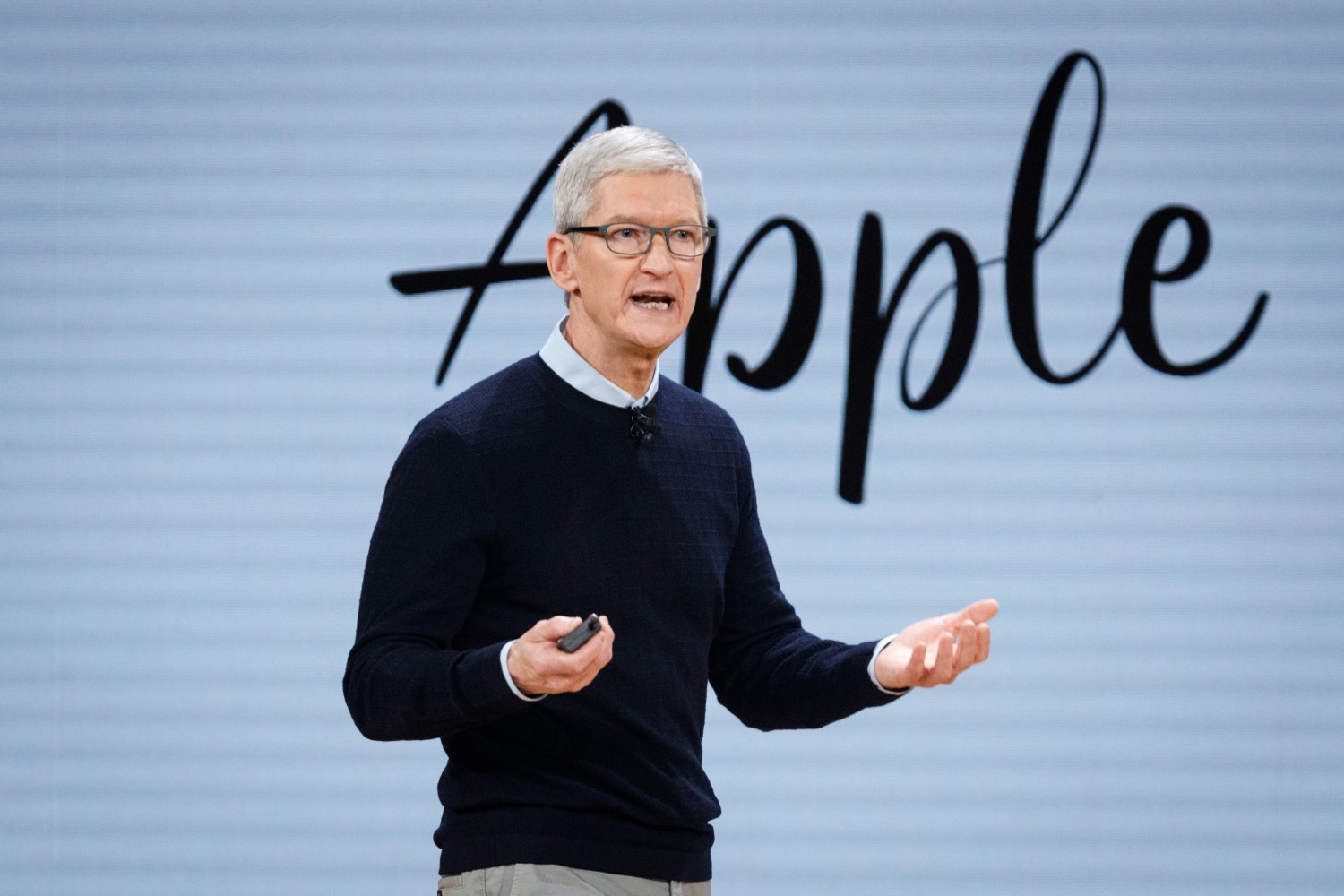
Apple CEO Tim Cook

The threat

“By Apple and Meta controlling … access to users’ experiences and data, there is a risk of them exerting too much control and impeding the vision of an open metaverse,” said TJ Kawamura, co-founder of Everyrealm, a virtual land developer backed by the powerful venture capital firm Andreessen Horowitz.

Most people leading or working for blockchain companies, whether it be cryptocurrency exchanges, NFT developers or gaming companies, dream of an advanced phase of the internet they call web3. Much different than the current status quo, with web3, the entire internet is decentralized. It is not controlled by a handful of major corporations like Apple, Google, Meta and Amazon, the technology companies that build the software, devices and infrastructure users depend on.  

Creating an open metaverse will quite possibly require negotiating a new paradigm with whatever companies are in a position to profit from providing access to this future digital realm. Through the use of blockchain technology, many believe a new, more transparent and decentralized internet can be created where average users are stakeholders and have a say in how the internet is governed.

Some argue that this era of decentralization will likely take time as companies like Meta and Apple “favor closed ecosystems” while they chase mainstream adoption of AR and VR, according to Rebecca Barkin, president of Lamina1, a blockchain company dedicated to fostering an open metaverse. Lamina1 was co-founded by Neal Stephenson, the author responsible for coining the term “metaverse” with his 1992 novel “Snow Crash.”

“Lamina1 is building a layer-one blockchain to support makers of the open metaverse,” said Barkin. “Our goal is to go on a journey with developers and corporations that have communicated their support for an open internet.”

Some progress

While neither Apple nor Meta has fully embraced blockchain technology at scale — Meta has experimented a little with crypto and non-fungible tokens — the latter of the two has made efforts which suggests it favors an open metaverse.

Last year, Meta joined more than 30 companies, including Microsoft, Epic Games and Lamina1, to form the Metaverse Standards Forum. The organization said in a statement it would work towards concepts considered vital to achieving a decentralized metaverse: open standards and interoperability. Realizing these concepts would mean devices and systems would more easily be able to interact with one another across different platforms, regardless of who created them.

Meta joining the forum demonstrates it may be open to collaborating with other technology companies keen to build an open metaverse. But like Apple, which is famous for its ability to operate secretly, Meta has historically been very protective not only of its inner workings, but also of how its Facebook and Instagram social media platforms collect, utilize and manage data.

The reality

Everyrealm’s Kawamura hopes that companies which choose not to embrace the openness and transparency meant to be inherent in blockchain — especially when it comes to issues of privacy — will lose out.

“It’s crucial to us that users are able to own their digital identity across all platforms,” he said. “If any of these existing platforms decides to deny users these rights, I believe builders and consumers will move to other options.”

For its part, Meta has stated that there “won’t be a Meta-run metaverse, just as there isn’t a ‘Microsoft internet’ or ‘Google internet’ today.” In the same statement from last May it also said that similar to today’s internet the “metaverse is not a single product … [or] an operating system like Microsoft’s Windows, or hardware like Apple’s iPhone.”

Meta CEO Mark Zuckerberg

But internet traffic is largely consolidate among a handful of companies whether it be through Google’s search engine or social media platforms like Facebook and Instagram, which have billions of users. And two smartphone operating systems dominate mobile connectivity; Apple’s iOS and Google’s Android. By far, the two largest sellers of mobile devices happen to be Apple and Samsung, which combined account for more than a third of the market.  

But Meta’s company line appears to judge circumstances differently. “Like today’s internet, the metaverse will be a constellation of technologies, platforms, and products,” it said in its statement. “It won’t be built, operated or governed by any one company or institution.”

While it’s accurate that there is not one single gatekeeper controlling all digital spaces via devices, systems and applications, the current iteration of the internet is largely controlled and monitored by a select few multibillion-dollar corporations; companies like Amazon, Apple, Microsoft and Meta.  

Anyone willing to suggest that history might repeat itself with the metaverse and the development of web3 appears to have reason for concern.

“People don’t want the metaverse to be controlled by a single centralized entity, such as Mark Zuckerberg,” said Pixelynx’s Phull.

© 2023 The Block Crypto, Inc. All Rights Reserved. This article is provided for informational purposes only. It is not offered or intended to be used as legal, tax, investment, financial, or other advice.

Go to Source
Author: RT Watson

Seven Seven Six leads $9.5 million Series A for digital fashion brand Syky

Digital fashion brand Syky completed a $9.5 million Series A round led by Seven Seven Six.

Brevan Howard Digital, Leadout Capital, First Light Capital Group, and Polygon Ventures also joined the round, according to a release on Tuesday. 

Syky, led by former Ralph Lauren Chief Digital Officer Alice Delahunt, aims to build a blockchain-enabled luxury platform. The company plans to “build a platform that equalizes creative opportunity for aspiring designers, showcases the best of fashion from emerging and established brands, and cultivates a community passionate about the evolution of fashion,” said Delahunt, who worked as a global director of digital and social at Burberry before joining Ralph Lauren.

Seven Seven Six’s Alexis Ohanian noted the fund backed Delahunt’s “vision to build the leading fashion platform and community for the next generation of designers and consumers.”

NFT collection

Following the raise, Syky is set to release its first NFT range on Jan. 20, known as The Keystone. The collection will work as a membership pass for fashion enthusiasts and leaders who want to “shape the future of fashion in digital, physical and augmented worlds.” 50 NFTs from the collection will be awarded to aspiring designers. 

Membership grants holders access to digital and physical fashion events and networking opportunities. Holders will also receive exclusive access to designer collection drops and early access to Syky releases. 

Fashion brands, including Prada and Hugo Boss, launched NFT collections last year as brands explored the space, while Decentraland hosted the first Metaverse Fashion Week in March 2022.

© 2023 The Block Crypto, Inc. All Rights Reserved. This article is provided for informational purposes only. It is not offered or intended to be used as legal, tax, investment, financial, or other advice.

Go to Source
Author: Adam Morgan McCarthy


Follow by Email
Facebook20
Pinterest20
fb-share-icon
LinkedIn20
Share